Views: 0 Author: Site Editor Publish Time: 2026-08-27 Origin: Site

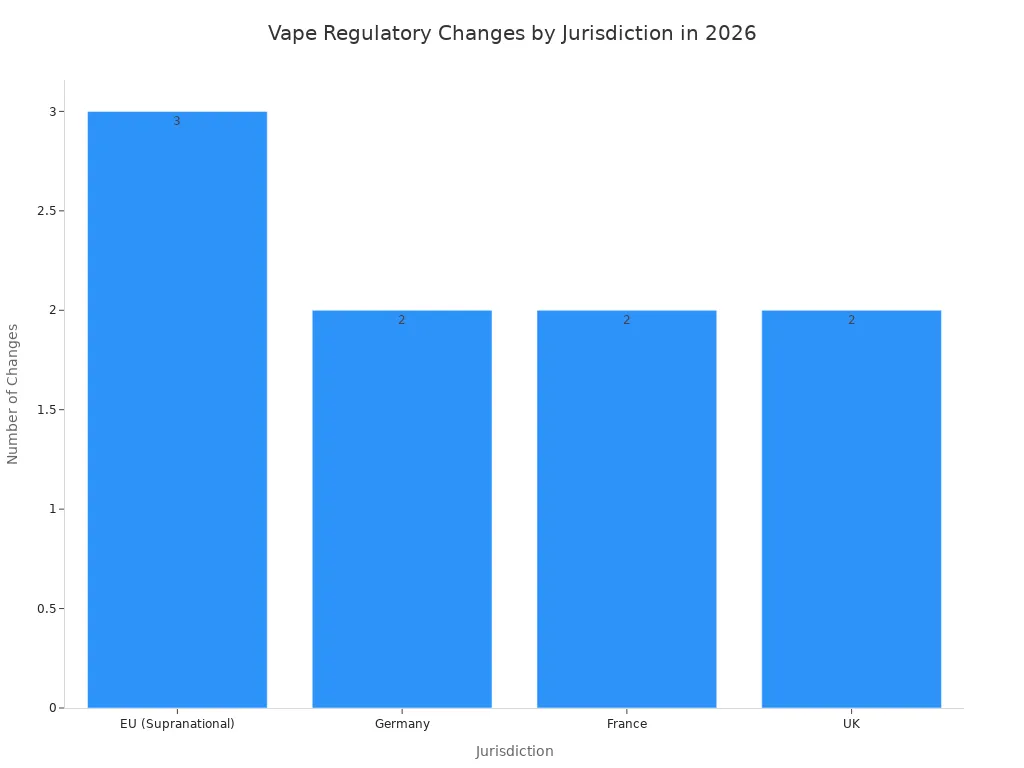
The vaping industry in 2026 presents a paradox. Market analysts project the global vape market to reach USD 48.20 billion this year, with a compound annual growth rate of 26.9% through 2033. Yet this opportunity comes with unprecedented challenges. Regulatory changes are reshaping the landscape. The UK introduces its Vaping Products Duty in October 2026, while the EU's Battery Regulation bans disposable devices with non-replaceable batteries by February 2027.
These shifts demand careful navigation.
Choosing the wrong vape manufacturer can trigger financial loss, legal complications, and lasting brand damage. You need a strategic partner, not just a supplier. This article guides you through defining your needs, verifying credentials, and building a partnership that supports your successful vape brand. Whether you plan to launch or grow your vape business, the right manufacturer makes all the difference.
First, figure out what you need in a product. That saves time and helps you find the right partner.
Check the manufacturer's credentials and certifications using official sources.
Check how much they can make, their research and development, and their ability to grow with you.
Use OEM or ODM services to build a brand that stands out and follow the rules.
Look at the total costs upfront, including tooling, shipping, and hidden fees.
Check communication speed and after-sales support for a reliable partnership.
Watch for warning signs like very low prices or fake approvals to steer clear of scams.
Before you reach out to any vape manufacturer, you need a clear idea of what you want to build. This idea acts like a map. It guides every choice, from flavor to packaging. Without it, you may waste time with suppliers who can't help you. Your product idea also helps you find the right business partner.
Your target market shapes every part of your product. In 2026, different age groups want different features. Millennials and Gen Z prefer smart devices with many flavor choices. Older adults value simple, easy-to-use products and help quitting smoking. Health-focused buyers look for clear ingredient lists and safety approvals. New markets in Southeast Asia and Latin America offer chances with fewer rules and growing incomes.
The table below shows how each group affects your niche choice.
Demographic Group | Key Preferences | Implication for Niche Identification |
|---|---|---|
Millennials & Gen Z | Tech-enabled, flavor-rich, personalized devices | Target with smart devices and diverse flavor portfolios via digital marketing |
Older adults | Safety, ease of use, cessation support | Develop user-friendly devices with health-tracking features and clear messaging |
Emerging markets (urban, higher income) | Premium devices, accessibility | Enter with localized distribution and mid-to-premium pricing |
Health-conscious consumers | Transparent ingredients, safety certifications | Position products with verified ingredient lists and wellness-oriented branding |
Trends also show growing demand for eco-friendly products. Biodegradable pods, recyclable packaging, and refillable systems attract green buyers. Digital health tools in smart devices appeal to tech fans. These trends help you find a profitable niche. Manufacturers that offer a variety of product types, including high-puff disposables with multiple flavors, can meet these needs.
Rules vary a lot by region. The UK adds its Vaping Products Duty in October 2026. This tax affects pricing and profit. The EU's Battery Regulation bans disposable devices with non-replaceable batteries by February 2027. This rule changes product design and materials. Your manufacturer must help you follow these rules. Not knowing regional rules can cause costly redesigns or market bans. Check the laws in your target markets before finalizing product specs. This step protects your money and gets your products on shelves.
Your product type sets your audience and production costs. Pod vapes are growing the fastest. They offer a smooth draw, great flavor, and low running costs. A 10ml bottle of e-liquid costs about $3–4 and equals 8–10 disposables. Vape pens offer a middle step with bigger batteries and adjustable airflow. Box mods target hobbyists with high power and full customization.
Disposables stay popular for their ease and high puff counts. Buyer preferences in 2026 show demand for longer device life, customization, and richer flavors. The table below shows these key preferences.
Consumer Preference (2026) | Supporting Evidence |
|---|---|
Longer device lifespan | Puff counts rising (e.g., 50K–60K devices); manufacturers focus on flavor consistency |
Customization | Adjustable airflow, cooling, and nicotine output |
Richer, layered flavors | Brands combine fruit, candy, dessert, and cooling finishes |
Smooth inhale | Ultrasonic technology reduces harshness while preserving flavor |
Dependability | Consistent flavor and reliable performance remain valued |
Simplicity | Straightforward engineering still holds value for many users |
Pick a product type that fits your target market's wants. A product line that includes disposables, pod systems, and customizable options, such as those offering multiple flavors in one device, meets the need for variety.
Nicotine strength affects user satisfaction and legal status. Higher strengths suit smokers switching from cigarettes. Lower strengths appeal to casual users. Flavor profiles matter too. Layered flavors mixing fruit, candy, and dessert notes attract younger buyers. Dual-flavor options like those combining fruit and cola flavors can attract users. Your flavor choices must match your target market's tastes. Test your flavors with sample groups before mass production.
Starting a vape business needs careful money planning. Initial costs include tooling, mold creation, and sample production. A reliable vape manufacturer gives clear quotes for these costs. Long-term costs include raw materials, shipping, and compliance testing. Budget for regulatory compliance, such as PMTA filings or EU registration fees. These costs add up fast. A detailed budget helps you avoid surprises and keeps your business profitable.
Minimum order quantities depend on your expected sales volume. Larger orders lower per-unit costs but need more upfront money. Smaller orders offer flexibility but may raise unit prices. For startups, try pilot runs to test the market before big orders. Accurate sales forecasts protect your cash flow and boost your negotiation power. Your manufacturer should support your growth, not push you into risky deals.
Once you know what product you want to build, the real work starts. You must look closely at each possible partner. This step separates good manufacturers from bad ones. A vape maker might look great online, but their real records show the truth. You need to check more than what their website says.
Start with official records. Every real manufacturer has proper business licenses. Ask for copies of their registration papers. Then check those papers with the agencies that issued them. For US markets, look up the FDA facility registration status. Facilities that are not registered become top targets for enforcement. You also want to make sure each product has an FDA Marketing Order. The FDA keeps a public list of approved products. Check this list before you pick any supplier.
State-level checks matter too. A manufacturer must register in every state where they do business. State tax registrations need to be renewed every year. You should also match inventory against state directory laws. Products removed from state directories leave you with stock that cannot be sold in that state. This situation costs you both money and time.
Legal problems show a manufacturer's true nature. Search court records for past lawsuits. Look for patterns of product liability claims or contract disputes. Check consumer complaint databases. The FDA publishes warning letters and inspection reports. Read these documents carefully. A manufacturer with many violations shows a pattern of carelessness. You want a partner who follows the law, not one who pushes its limits.
Staying in business long signals reliability. A company that has weathered industry changes knows how to adapt. They handled regulatory changes and market shifts. This experience turns into practical knowledge. They know what works and what fails. You gain from their lessons.
Ask about their client retention rates. Clients who stay long-term show satisfaction. A manufacturer who loses clients quickly may have hidden issues. Request case studies or references from current partners. Contact those references directly. Ask about delivery times, product quality, and problem solving. These talks reveal more than any marketing brochure.
Third-party feedback gives unbiased insight. Search industry forums and social media platforms. Independent review sites often have honest opinions. Look for patterns in the feedback. One negative review might be a one-time issue. Repeated complaints about the same problem signal a real issue.
Your professional network offers another useful resource. Ask fellow business owners about their experiences. A trusted recommendation from someone in your industry carries weight. They have no reason to mislead you. Their firsthand experience helps you avoid costly mistakes.
Quality certifications show commitment to standards. Good Manufacturing Practices (GMP) certification shows your manufacturer follows strict production rules. ISO 9001 certification proves they keep quality management systems. These certifications need regular audits. Ask to see current certificates, not expired ones. Verify them with the issuing bodies. Certifications from relevant regulatory bodies and international trademark registrations demonstrate commitment to international standards.
The PMTA process serves as the main federal route to lawful marketing approval. Under 21 U.S.C. § 910, manufacturers must show their products protect public health. Request current testing reports for every product you plan to order. Check the status of products under review or appeal. This status often becomes the focus of state directory lawsuits. A manufacturer who hesitates to share these documents raises red flags. Openness about regulatory compliance builds trust. You need a partner who welcomes scrutiny, not one who avoids it.
Remember to verify every document on your own. Do not accept the manufacturer's word alone. Contact the issuing agencies directly. Cross-check certification numbers with official databases. This care protects your business from fake credentials and false claims.
You have checked credentials and certifications. Now you must look deeper. A reliable vape supplier shows its true value through daily work, not just paperwork. You need to see how they make products, how they create new ideas, and how they grow. These qualities decide if your partnership works or fails.
Your first step is checking their physical operations. You want to see the real place where your products are made. A proper audit covers several key areas. The table below shows what you should look at.
Audit Area | Key Aspects to Verify |
|---|---|
Regulatory Compliance & Documentation | Current certifications for e-cigarette manufacturing; pharmaceutical-grade nicotine purity records; material safety data sheets; component traceability logs |
Production Environment & Equipment | Cleanliness of e-liquid mixing/filling areas; temperature and humidity monitoring logs; calibration records for filling machines and battery testers |
Quality Management & Testing | Incoming QC records for components; in-process assembly checks; finished product tests (leak, battery capacity, e-liquid composition); frequency and documentation of these tests |
A reliable manufacturer will have dedicated teams for each stage of production, ensuring focused attention and quality control. Their quality control systems track parts from arrival to final assembly, making sure nothing slips through.
Your manufacturer's sourcing choices directly affect your product's safety. You must ask hard questions about their raw material suppliers. Watch for red flags that signal trouble.
Red flags to watch for:
Refusal to provide third-party lab testing (COAs), indicating hidden poor manufacturing practices.
Unclear communication about component sourcing, especially for lithium batteries and coil materials, which poses safety and quality risks.
'Bait and switch' sample quality, where perfect prototypes are followed by defective mass-production runs, revealing poor scaling abilities.
Must-haves for assessment:
Clear Service Level Agreement (SLA) covering allowable defect rates (under 1%) and clear return/credit policies.
A reliable vape supplier welcomes these questions. They know your reputation depends on their sourcing choices. They share their supplier lists and testing protocols openly.
The vaping industry changes fast. Your manufacturer must keep up with new technology. Look for investment in ceramic heating technology, battery management systems, smart electronics, and leak-resistant designs. These innovations define the next generation of vaping products.
Industry leaders demonstrate commitment through proprietary technologies that enhance safety and performance. In-house innovation creates unique offerings.
Regulatory landscapes shift constantly. Your manufacturer must respond quickly. For Chinese and global e-cigarette suppliers, U.S. market access now requires full-chain compliance covering manufacturing, documentation, import control, distribution, retail, and marketing discipline. This means your partner must put in place complete measures across their entire operation, not just in the final product.
Expert advice emphasizes that quality and innovation should drive your choice of manufacturer. You should look into the manufacturer's track record, read customer reviews, and verify adherence to safety standards. Look beyond longevity and assess their ongoing commitment to improvement. Being complacent leads to poor products.
Your business will grow. Your manufacturer must grow with you. Check their equipment specs to make sure they can handle different formulas and product types. Verify their equipment performs well in high-volume operations. A machine that works in small batches but breaks down under continuous production signals a major problem.
You should also stress-test their entire workflow under surge scenarios. Evaluate extraction, filling, packaging, warehousing, and fulfillment processes. Look for documented, version-controlled standard operating procedures that can be trained across a growing team. This ensures consistency doesn't depend on specific individuals.
Your product roadmap will change. Your manufacturer must adapt. Leading companies demonstrate flexibility in product customization and manufacturing processes. A reliable vape supplier combines strong production capacity with real innovation and true scalability. They invest in their facilities, their people, and their processes. They prepare for your growth as if it were their own. When you find this combination, you have found a partner worth keeping. Your search for high-quality products and long-term success starts with these qualities. Choose wisely, and your business will thrive.
Customization services turn your product vision into reality. Two main paths exist: OEM and ODM. Each offers distinct advantages for your brand. Understanding these options helps you choose the right approach for your business goals.
OEM gives you complete control over product design, materials, and features. You own every aspect of the final device. This path creates the strongest brand identity and technology differentiation. You can launch new concepts or patent-pending features that competitors cannot copy. The trade-off involves higher initial investment and longer time to market.
ODM offers a faster route. You start with proven designs and modify them to fit your brand. You control the logo, packaging, and minor feature adjustments. This approach brings products to market in weeks rather than months. It suits brands testing new markets with limited resources.
Leading manufacturers invest heavily in R&D to develop proprietary processes. These processes enhance safety, reduce costs, and enable rapid customization. A reliable vape manufacturer controls critical components like batteries and atomizers. This control influences pricing, quality standards, and innovation. Your brand benefits from their expertise while maintaining your unique position.
Both models rely on manufacturer certifications for compliance. ODM uses proven designs that already meet industry standards. This advantage reduces your regulatory risk significantly. OEM requires custom compliance validation for new architectures. You must test new designs thoroughly before launch.
Working with certified factories ensures product safety and regulatory approval. Look for partners with relevant certifications and credentials. Their experience navigating complex regulations protects your business. They know what documents regulators expect and how to prepare them. This guidance saves you time, money, and legal headaches.
A typical OEM/ODM process starts with an initial consultation. You share your ideas and customization needs with the team. Design and R&D specialists then create 3D drawings based on your vision. You review these drawings and request modifications until they match your expectations.
Structural engineers take over once you approve the design. They create the internal layout based on your specifications. This stage determines how components fit together and function. You receive an accurate quotation after the structural design completes. This quote covers all production costs with no hidden surprises.
Sample production marks the next critical step. The manufacturer builds a physical prototype for your review. You test the device's feel, performance, and flavor delivery. This hands-on evaluation reveals issues that drawings cannot show. You confirm the sample meets your standards before committing to large orders.
You can customize surface patterns, text, packaging, and product structure to create a unique brand identity that stands out on shelves. The process ensures every detail aligns with your vision. Once you approve the sample, both parties confirm order details including quantity and delivery time. Production begins only after you sign off on every element.
IP protection starts before you contact any manufacturer. Register your trademark and design patents proactively. Many brands skip this step and face costly consequences. A partner or distributor may register your mark first. This action blocks your market entry or forces expensive buyouts.
File patent applications promptly after finalizing your designs. This defensive measure prevents manufacturers from filing blocking patents on your innovations. Utility models offer cost-effective protection that deters infringement. Register your IP even if your initial market lies outside your home country.
Your contract must explicitly state IP ownership. In an OEM setup, confirm that all existing and newly developed IP belongs to you. In an ODM model, distinguish pre-existing IP from new developments. Negotiate ownership terms upfront to avoid disputes later.
Include strict anti-competition provisions in your agreement. Forbid the manufacturer from selling products bearing your brand to anyone else. This clause prevents parallel importing and unauthorized sales. Strengthen confidentiality clauses to protect trade secrets like e-liquid formulations. Apply these obligations to the factory, its staff, and subcontractors. Add liquidated damages clauses that impose significant penalties per violation.
Operational measures complement your legal protections. Supply pre-mixed base ingredients separately from flavor concentrates. Blend them on-site under your supervision. This approach keeps your master formula confidential. Use official communication channels for all technical discussions. Document everything with confidentiality watermarks. These practices safeguard your innovations throughout the partnership.
Price shapes every choice you make. Yet the cheapest quote rarely gives the best value. A low-cost vape maker may skip steps on rules or quality. Those shortcuts cost you more later in recalls, fines, and lost buyers. Smart buyers look at total cost, not just the price per item.
Many things affect what a maker charges you. Components, manufacturing scale, compliance, authenticity, labor, and logistics all play a role. You should think about economies of scale when you compare quotes. Bigger orders cut the cost per unit through bulk buying and shared tooling costs. Look at minimum order quantities with care. Most makers have significant minimum order quantities. Smaller orders cost more per device.
Ask every supplier for a full Bill of Materials (BOM). This paper lists each part and its price. Compare BOMs side by side. You will see where one maker charges more for batteries or e-liquid. Ask for labor and assembly cost breakdowns too. These details show if a low price comes from good methods or cheap parts.
Plan for hidden costs beyond the unit price. PMTA rules, shipping, insurance, and excise taxes can add significant costs. A quote that skips these costs misleads you. A good vape maker gives clear quotes with every line explained.
Your vape business size sets what MOQ makes sense. A startup cannot afford huge orders of a new flavor. Look for makers that offer no MOQ on samples. Seek clear price tiers for different order sizes. These tiers let you grow slowly as demand rises.
Use low MOQs for new products and untested ideas. Move to higher MOQs only for proven items with steady demand. This plan protects your cash while you learn what sells.
Several tactics help you get better terms:
Build long-term supplier ties with clear volume plans.
Ask for split deliveries to manage storage and cash flow.
Look into shared orders with other businesses to meet MOQ limits.
Set up graduated ordering schedules that build to full MOQs over time.
A good manufacturer works with clients to find workable MOQs, especially for startups. They help you plan pilot runs that test the market without risking your whole budget.
Custom products need molds and tooling. These costs often show up only after you pick a design. Ask about tooling fees from the start. Clarify if they are one-time charges or spread into unit pricing. Get these details in writing before you approve any design work.
Shipping lithium batteries costs more than normal freight. Customs duties and tariffs add another layer. Excise taxes on vaping products can be significant in some markets. Add these costs into your total per unit. A maker who helps you understand these charges shows real partnership.
The cheapest quote rarely gives the best result. Focus on total cost of ownership. A good vape maker gives clear pricing and works with you to find workable order sizes. That openness protects your margins and your name.
How your manufacturer talks to you shows how they will treat you later. If they ignore your questions before you buy, they will likely vanish when problems show up. You need a vape maker who values your business from the first message through every order. Their quick replies build the base for a good working relationship.
Send a full question list to each possible partner. Write down how long they take to answer. A reply within 24 hours shows they care about customers. A week of silence means trouble ahead. You want a partner who treats your questions as important. A manufacturer with a dedicated sales team can answer every question fast, setting the tone for the work ahead.
Clear talk stops costly mistakes. Check their English skills during your chats. Do they explain technical details correctly? Can they talk about rules without getting lost? A maker who struggles with words will struggle with your orders. Their technical know-how matters just as much. Ask about their making steps and quality checks. Their answers show their skill and their honesty. A partner who talks clearly saves you time and money.
Every maker should stand behind their goods. Read their warranty terms closely before you sign anything. The table below shows the normal warranty setups you should look for.
Aspect | Typical Coverage |
|---|---|
Warranty period | 90 days from the buy date |
Coverage | Factory flaws for real products |
Exclusions | Atomizers, extras, misuse, normal wear |
Claim needs | Proof of buy, serial number, photos |
Reply time | 1-3 work days for after-sales help |
You should also check their return rules for items like e-liquids and disposables. Most makers treat these as final sales because of health rules. A clear, written policy shows they respect their buyers. Vague terms hide problems that will show up later.
Your buyers will have questions about your goods. Your maker should help you answer them. Make sure they offer technical help for fixing issues and product facts. A manufacturer that gives full pre-sale and after-sale services can fix any issues quickly, so your buyers stay happy. This level of good service protects your brand name and builds trust.
Shipping terms decide who takes charge at each step. EXW puts all duty on you. FOB moves risk when goods go on the ship. CIF adds freight and insurance to the arrival port. DDP makes the seller handle everything including taxes. Pick terms that fit your skills and risk comfort.
Shipping routes change your costs and delivery times. Sea freight costs the least per item but slows your cash flow. Air express is faster but costs more. The China-Europe Railway offers a middle choice. A manufacturer with a regional warehouse can provide faster delivery and easier logistics.
Paper mistakes cause many vape shipment delays. Your maker must handle these papers right:
UN38.3 Test Report proving lithium batteries handle transport stress
MSDS listing chemical makeup and danger classes
DGM Dangerous Goods Declaration for all battery shipments
Commercial Invoice with HS code and Incoterms label
Packing List with box sizes and battery setup
Certificate of Origin for tax math
A maker who handles these papers well shows their experience. They know the rules and get ready ahead of time. This skill stops delays and keeps your supply line moving. You need a partner who treats shipping as carefully as they treat making. Their good service reaches through every delivery, so you get exactly what you ordered.
The vaping market has both honest makers and skilled fakes. You must learn to tell them apart before you spend money. Some suppliers show shiny websites and good stories. Their real work tells a different story. Your job is to find real partners and avoid polished scams. This section shows you how to spot warning signs and check every claim a vape maker makes.
Low prices tempt every buyer. Yet very cheap quotes often hide big problems. You need to see the signs that mean trouble before you lose your money.
You can protect yourself with a few easy habits. Buy only from trusted sellers with good names. Licensed shops and real online stores promise authenticity and give lab reports. Compare prices from many sources to spot odd ones. Trust your gut when something feels wrong. Check the product and seller fully by reading reviews, return rules, and business history. These steps take time but save you from costly errors.
Fake papers show up everywhere in this field. Some suppliers copy logos from real certifying groups. Others make up whole reports. You must check every paper you get.
Follow this check process for certifications:
Look for rule-based certifications like CE Marking for European safety, FCC Certification for US communications, and RoHS Compliance for dangerous substances.
Look for health and safety labels including UN38.3 battery safety certification and ingredient labels listing VG, PG, nicotine levels, and flavorings.
Use official brand apps to scan authenticity codes or QR codes on packaging.
Visit the maker's official website to check serial numbers directly.
Watch for advanced checks like blockchain tech or digital certificates used by high-end brands.
A reliable vape maker welcomes this checking. They know that following rules builds trust. Certifications from relevant regulatory bodies and international trademark registrations demonstrate commitment to global standards and quality control.
Nothing beats seeing the real production floor. A physical visit shows conditions that papers cannot show. You see cleanliness, equipment care, and worker habits firsthand. You see whether the place matches the claims in their ads.
If travel is not possible, ask for a virtual tour. Many good makers offer live video walkthroughs of their sites. You can ask to see specific areas like mixing rooms, assembly lines, and testing labs. A supplier who refuses any site visit raises quick concerns. Honest makers welcome watching because they have nothing to hide.
Third-party inspection services give an outside check of a maker's claims. These firms do factory audits and product tests for you. They record their findings with detailed reports and photos.
Set inspection rules ahead of time. Define acceptable quality levels, critical and major defect types, and who does the check. Test a statistically meaningful sample from the pilot batch against your written spec. Do not rely on visual checks alone.
Samples show the truth about a maker's work. A supplier who hesitates to send samples signals trouble. A manufacturer that encourages sample requests and gives detailed product specs shows confidence in their goods.
Check samples against specific standards. Performance depends on the airflow chamber, coil type, microprocessor, and battery size. These parts decide vapor production and use rates. Longevity relies on puff count tested at set intervals and e-liquid capacity in milliliters. Quality means steady flavor delivery throughout the device's life.
Your own testing gives only part of the picture. Independent lab analysis confirms what your senses cannot detect. These labs use special tools to find harmful compounds.
This outside check gives proof that your products meet safety standards. It protects your brand name and your customers' health. A vape maker who supports this testing shows real commitment to quality. Choose partners who welcome checking rather than avoiding it.
The best vape manufacturer does more than fill orders. It becomes a strategic partner that helps your business grow. Your goal shifts from finding a vendor to building a relationship that lasts years. This partnership saves you time, money, and frustration.
Communication keeps the partnership strong. You need a rhythm that both sides follow. Schedule regular video calls during the first months of production. These calls catch small issues before they become big problems. Move to less frequent calls once the workflow stabilizes. Create a shared dashboard for production updates, quality metrics, and shipment tracking. This dashboard gives everyone the same information at the same time. Both sides see the same numbers, so misunderstandings drop.
A single point of contact on each side prevents confusion. Your team talks to one person at the manufacturer. That person knows your account, your preferences, and your history. They also know who to ask inside their company for technical or logistical questions. This system speeds up problem resolution. You never hear "I don't know, ask someone else." A manufacturer that assigns dedicated account managers for each client ensures consistent communication and faster responses. Strong partnerships need clear contact points.
IP protection continues from the design phase into your partnership agreement. Your contract must state clearly who owns every design, formula, and tool. Include clauses that prevent the manufacturer from selling your designs to other buyers. Add non-compete terms that protect your market for a specific period. These clauses give you legal recourse if problems arise. A strong contract also covers confidentiality for your business plans and sales data.
SLAs turn expectations into measurable targets. Set acceptable defect rates, typically under one percent. Define delivery time windows and late shipment penalties. Include response time requirements for after-sales inquiries. These metrics give both sides clear benchmarks. You know when the manufacturer meets expectations. They know what standards you demand. Review these metrics quarterly and adjust them as your business grows. Successful partnerships rely on shared expectations.
Your product line will evolve. Share your roadmap with your manufacturer early. Discuss upcoming product categories, new features, and target launch dates. This advance notice lets them prepare production capacity and source materials. They can also suggest improvements based on their technical expertise. A manufacturer who knows your plans becomes a better partner. They invest in your success because they see your commitment.
The vaping industry changes fast. Your manufacturer must keep pace. Schedule regular strategy sessions to review market trends. Discuss new regulations in your target markets and how they affect product design. A manufacturer who tracks these changes protects your business from compliance surprises. They can adapt your products before new rules take effect. This proactive approach saves costly redesigns and market delays.
A manufacturer's mission should reflect this long-term thinking. The company provides high-quality products and services globally. They build long-term partnerships that focus on quality, compliance, and innovation. When you choose a partner with this mindset, you invest in your vape business's future. The time you spend building these relationships pays returns for years.
Choosing the right vape manufacturer takes time and careful research. Define your product needs, verify credentials, evaluate production capabilities, analyze costs, and confirm claims. Each step protects your business from costly mistakes. A reliable vape supplier becomes a strategic partner in your success. This investment of time saves you money and headaches later. Start your search with a clear checklist. Look for a vape manufacturer showing transparency, compliance, and innovation. A manufacturer that demonstrates these qualities through certifications, experience, and commitment to quality is a good choice. Their OEM and ODM services can help you create a unique brand. A partner with a warehouse in your target region ensures fast shipping. Choose a partner who values your long-term success. This decision shapes your vape business and your customers' reliable vaping experience.
Ask for current certificates, not old ones. Call the agencies that gave them out to check they are real. Look up certification numbers in official databases. Ask for recent test reports like PMTA filings. A good vape maker will let you check and share papers without holding back.
Most makers have significant minimum order quantities. New brands can ask for small test runs to see how the market likes them. Look for suppliers with different price levels for different order sizes. A good manufacturer helps clients find a workable MOQ, especially for new brands.
The time depends on how complex the design is. Simple changes take weeks. Full custom designs take months. The process includes 3D drawings, structure design, price quotes, and making a sample. Always say yes to a physical sample before you start making lots of products. This step stops big mistakes later.
Watch for suppliers who refuse to provide samples, test reports, or allow factory visits. Verify certifications with issuing agencies. Be cautious of those who are secretive about their processes.
Ensure your contract clearly defines intellectual property ownership and includes confidentiality clauses. Register your trademarks and patents proactively. Take steps to keep your formulas confidential.
Sea freight is cheapest but takes the longest. Air express is faster but costs more. The China-Europe Railway is a middle option. Choose a manufacturer with a regional warehouse for faster delivery and easier logistics.
Test for steady flavor, battery life, and puff count. Check build quality and leak resistance. Send samples to outside labs for chemical analysis. Confirm test results match the manufacturer's claims before placing large orders.
Normal warranties cover factory defects for a specified period. They typically exclude consumables and misuse. You need proof of purchase and serial numbers to make a claim. Get the warranty terms in writing before signing any agreement.